If your car sits lower on one side when parked, start by checking the parking surface, uneven cargo and tire pressure. If it still leans on level ground with the load removed and pressures corrected, the suspension needs a closer look. For drivers in Osage Beach, this sequence helps separate a simple parking or loading issue from a problem that needs inspection.
A worn or damaged spring can cause sagging. On a vehicle with air suspension, the air supply and height controls also need consideration. A shop should measure ride height using the vehicle’s specifications and inspect the system before recommending repairs.
First, rule out the parking surface
Before judging the stance, choose a firm, level parking area. A sloping surface or a wheel sitting in a depression can make a car appear uneven. Comparing wheel gaps while the tires sit at different elevations is a poor starting point for diagnosis.
If the vehicle can be moved safely, compare its appearance in a different, level spot. Set the parking brake, get out and look from the front and rear. Note whether the same corner still appears low. Keep your observations outside the vehicle; you do not need to crawl underneath it.
If the lean disappears, record that detail. If it remains, continue with the cargo and tire checks rather than guessing at a failed component.
Remove uneven cargo before comparing sides
Unload removable heavy items, especially anything concentrated on one side of the trunk, cargo area or bed. Compare the stance with passengers out of the vehicle.
Check again in the same level spot after unloading. Keep the comparison consistent so you can tell what changed.
Make a note of whether unloading changes the lean. Suspension manufacturer Monroe lists excessive sagging or leaning, particularly under load, among the warning signs of worn springs. An improvement after unloading is useful information, but it does not by itself establish spring condition. Monroe’s spring inspection guidance
Check tire pressure with a gauge
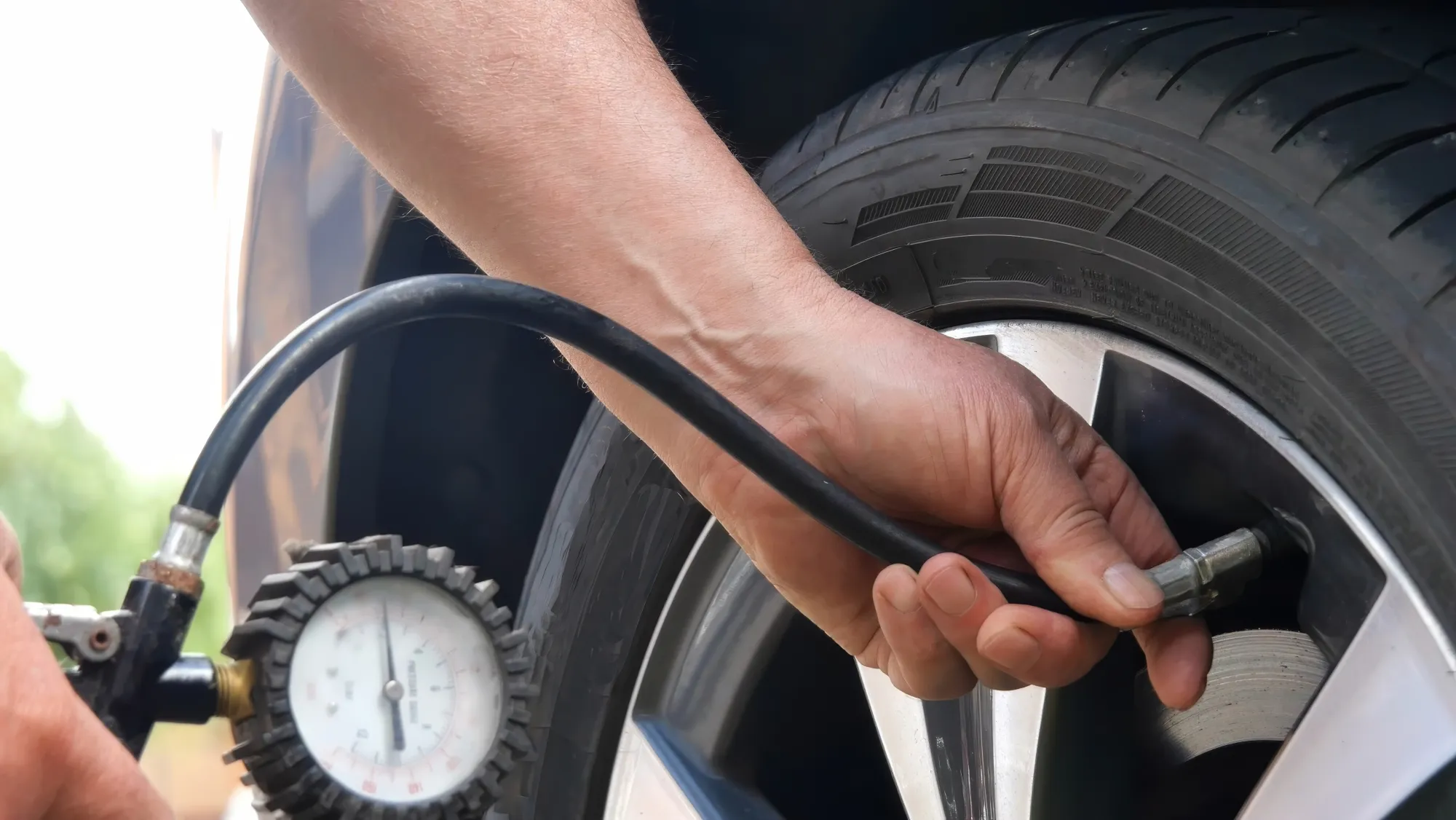
Before calling the problem uneven suspension height, check all road tires with a gauge. Looking at the sidewalls or checking for a dashboard warning is not enough.
Use the vehicle’s tire-information label or owner’s manual for the recommended cold pressures. Follow the specified pressure for each axle; the front and rear recommendations may differ. NHTSA defines cold tires as those on a vehicle that has not been driven for at least three hours. Its guidance also explains that TPMS warns of significant underinflation, so an unlit warning lamp does not replace a gauge check. NHTSA tire guidance
Write down each tire’s reading before adjusting it, labeling the readings by corner. Keep those original readings along with the recommended pressures. If the stance changes after correction, you can show the technician exactly what you found rather than relying on a memory that one tire seemed low.
Correct the pressures to the vehicle’s recommendations, then compare the stance again. Do not add extra air to one tire simply to make the body look level.
While checking, look for visible tire damage. The shop’s tire inspection tips can help you organize that check. If a tire is visibly flat or damaged, address that before moving the car for another comparison.
How a shop investigates a car leaning to one side
If the same side stays low after those checks, the next step is measurement and inspection. Sunset Tire & Service lists steering and suspension work among its services.
Ask how the measured ride height compares with the specifications for your vehicle. The reference points and test conditions should follow its service procedure. An eyeballed fender gap or a generic internet tolerance is not enough to decide whether a part has failed.
When reviewing the results, ask which measurements were outside specification and what the inspection found at those locations. If the concern cannot be reproduced, show the photos and describe the parking and loading conditions when you noticed it. Ask whether the vehicle needs to be checked under those conditions before agreeing to a parts replacement. This keeps the repair discussion tied to the observed lean and the inspection findings.
Springs and the surrounding suspension
On a vehicle with conventional springs, the inspection should include spring condition and the surrounding suspension assembly. The goal is to identify the reason for the low stance before choosing replacement parts.
Monroe’s guidance identifies corrosion, distorted coils and excessive sagging as reasons to investigate springs. It also cautions that an acceptable parked height does not rule out a spring problem that appears while the vehicle is moving or carrying a load. That is why your description of when the lean appears matters alongside the measurements.
Air suspension, when equipped
If your vehicle has air suspension, tell the technician whether it looks level when first parked but lower later. Record what happens rather than assuming that timing proves a particular leak.
Air springs support vehicle weight, while height sensors, a controller, a compressor and valves work together to regulate height. Air lines and connections must retain pressure. Those components provide several areas to investigate when the stance changes; the low corner alone does not identify the fault. Monroe’s air-suspension overview
Where alignment fits
Improper ride height can affect alignment, so mention pulling or uneven tire wear during the inspection. Those symptoms help describe the problem, but they do not establish its cause.
The shop’s guide to signs your vehicle needs a wheel alignment explains related symptoms. For a visibly low corner, ask for the height concern to be evaluated before treating an alignment as the answer.
What to record before the inspection
A few specific observations can make the concern easier to reproduce:
- Which corner or side looks low, viewed from the driver’s seat.
- Whether the lean remains in a level parking area.
- What changed after removing cargo and correcting tire pressures.
- Whether it appears immediately after parking or develops later.
- Any recent tire or suspension work, along with changes in ride or handling.
Photos taken from comparable positions can document what you noticed. Share the observations and let the measurements and inspection determine the cause.