If you are wondering, can you drive with a flashing check engine light, in most cases you should not continue driving normally. For drivers in Osage Beach, the immediate response is the same as it is elsewhere: ease off the accelerator, reduce your speed and engine load, and find a safe place to stop. A flashing light commonly indicates a severe engine misfire that could damage the catalytic converter.
If the engine is shaking, losing substantial power, overheating, or producing an unusual odor, shut it off once you are safely stopped and arrange a tow. The same advice applies if the warning continues to flash. Check your vehicle’s owner’s manual for instructions specific to your make and model.
What Does a Flashing Check Engine Light Usually Mean?
The check engine light is part of your vehicle’s onboard diagnostic system. When the system detects a problem with engine operation or emissions controls, it may store a diagnostic trouble code and turn on the warning light.
According to the U.S. Environmental Protection Agency, a blinking or flashing malfunction indicator light points to a relatively severe engine misfire. A misfire occurs when one or more cylinders do not complete combustion properly.
A severe misfire may allow unburned fuel to reach the exhaust system and damage the catalytic converter. That is why a flashing light requires a quicker response than one that remains steadily illuminated.
You may also notice:
- Rough or uneven engine operation
- Shaking or vibration
- Hesitation when accelerating
- Reduced power
- An unusual exhaust smell
- Stalling or trouble maintaining speed
Symptoms vary, but the flashing light alone is enough reason to reduce engine load and arrange a prompt diagnosis.
What Should You Do When the Light Starts Flashing?
If your check engine light starts flashing while you are driving, concentrate on reducing strain on the engine and finding a safe place to stop.
Ease off the accelerator
Do not try to accelerate through the problem. Reduce throttle smoothly and allow the vehicle to slow without making abrupt maneuvers.
Reduce speed and engine load
Hard acceleration, towing a boat, carrying heavy cargo, and climbing steep grades place more demand on the engine. Avoid those conditions when possible. A General Motors owner’s manual, for example, advises drivers to reduce speed and avoid hard acceleration and steep grades when the light is flashing.
Pay attention to how the vehicle is running
Strong shaking, major power loss, overheating, or an unusual odor are signs that you should stop as soon as it is safe. Continuing to run the engine under those conditions may make the underlying problem worse or damage the catalytic converter.
Pull over safely
Choose a location away from moving traffic. Once stopped, turn off the engine if the light is still flashing or the vehicle is running poorly.
Check the owner’s manual
Instructions for warning lights vary by manufacturer and model. Review the check engine light or malfunction indicator lamp section before deciding if the vehicle can be moved.
Arrange diagnosis or towing
Arrange a tow if the engine runs roughly, lacks power, overheats, smells unusual, or continues to trigger a flashing light. If the light stops flashing and the vehicle seems to run normally, it still needs prompt diagnosis. The computer may have stored a code and operating data from the event.
This guidance applies if the warning appears in Osage Beach, elsewhere around the Lake of the Ozarks, or while you are traveling outside the area.
Flashing vs. Steady Check Engine Light: What Changes?
Both flashing and steady check engine lights need attention, but the level of urgency is different.
| Warning light | General meaning | Recommended response |
|---|---|---|
| Flashing check engine light | A severe misfire may be occurring, creating a risk of catalytic converter damage | Reduce speed and engine load immediately. Stop safely and arrange diagnosis or towing based on the symptoms. |
| Steady check engine light | The onboard diagnostic system has detected an engine-management or emissions-control fault | Schedule diagnosis soon and follow the owner’s manual, even if the vehicle appears to run normally. |
A steady light should not be ignored. If the vehicle is operating normally and the owner’s manual permits it, a short and gentle drive to a service facility may be reasonable.
A flashing light calls for a more cautious response. Reduce the load immediately. If the flashing continues or the vehicle develops drivability problems, stop as soon as safely practical.
Why Is a Trouble Code Only the Beginning of Diagnosis?
A trouble code provides useful information, but it does not necessarily identify the failed part.
The EPA explains that the onboard diagnostic system stores a diagnostic trouble code when it detects abnormal operation. A technician can retrieve that code with a scan tool. The code points to the affected condition, circuit, or system, but further testing is usually needed to find the cause.
For example, a scan tool may retrieve a code for a misfire in a specific cylinder. That narrows the search, but it does not prove that the spark plug or another particular component has failed.
Possible causes include:
- A worn, fouled, or damaged spark plug
- A fault elsewhere in the ignition system
- An injector or fuel-delivery problem
- Damaged wiring or a poor electrical connection
- Incorrect information from a sensor
- A mechanical engine problem
- An air, fuel, or combustion fault
- An exhaust or catalytic converter problem related to the misfire
Replacing a part based solely on a generic code description can miss the real problem. A proper flashing check engine light diagnosis uses the code as a starting point, followed by testing that confirms the cause before repairs are recommended.
What May a Technician Check?
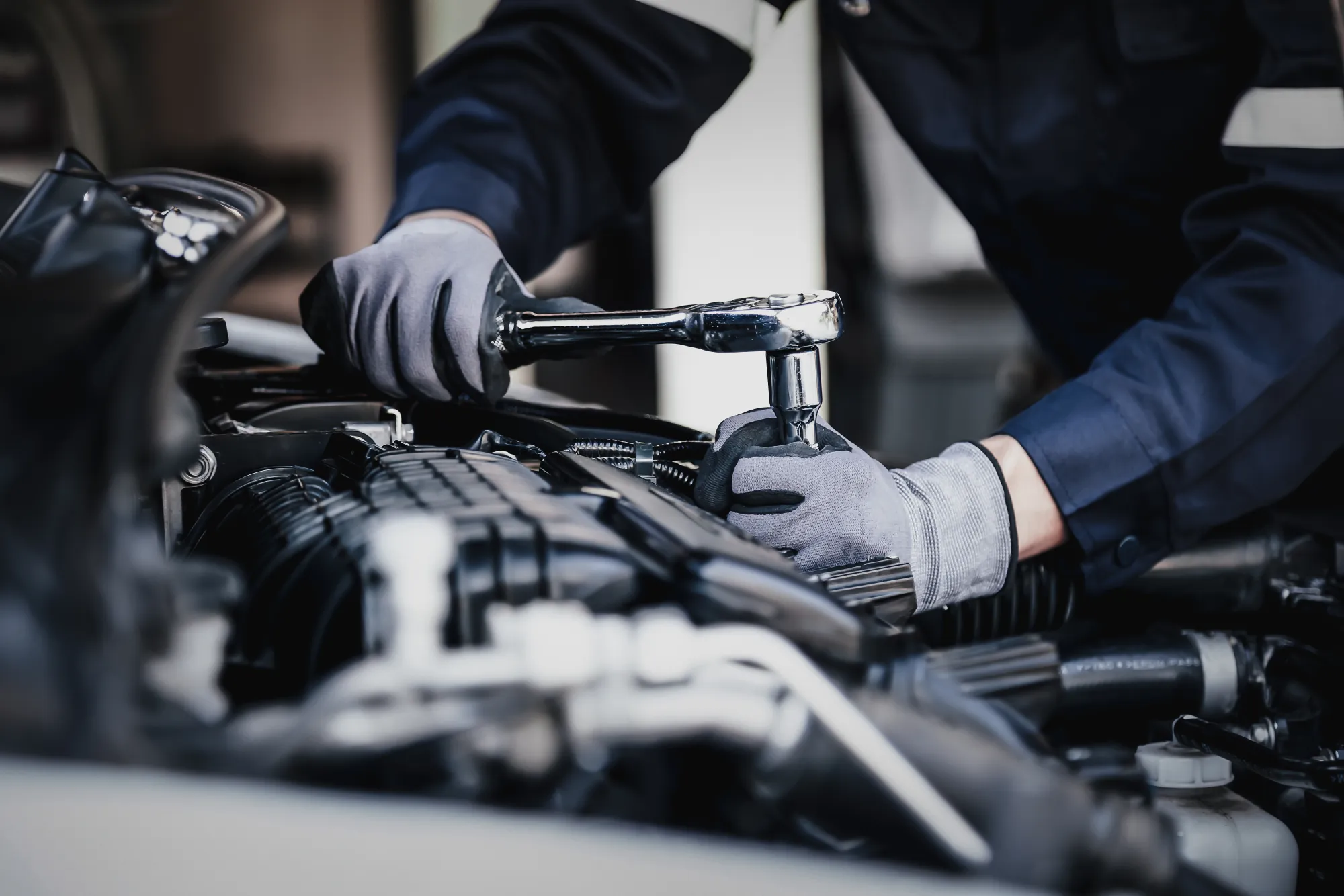
The diagnostic process depends on the stored codes, symptoms, service history, and how the vehicle behaves during testing. A technician may scan the relevant modules, document stored and pending codes, and review data captured when the fault occurred.
Testing may include several areas.
Ignition components
Spark plugs and other ignition components may be checked for wear, damage, contamination, or improper operation. A weak spark plug can cause a misfire, but it should be tested rather than assumed to be the source.
Fuel delivery and injectors
Each cylinder needs the correct amount of fuel. Testing fuel delivery and injector operation can help determine if the misfire comes from an ignition fault or a cylinder receiving too much or too little fuel.
Sensor and fuel-trim data
Scan data shows how the engine computer responds under different operating conditions. A technician may review oxygen-sensor information, fuel-trim readings, misfire counts, and related inputs for signs of an underlying problem.
Wiring and electrical connections
Loose connectors, damaged wiring, corrosion, or poor circuit connections can interrupt power or signals to ignition components, injectors, and sensors. Electrical testing may be needed if the initial results point to a circuit problem.
Exhaust and catalytic converter condition
Because a severe misfire can affect the catalytic converter, the technician may also evaluate catalyst operation and related exhaust components.
The goal is to correct the condition that caused the warning, rather than simply clearing the code. Sunset Tire & Service lists Engine Repair & Diagnostics among its services in Osage Beach. Contact the shop for a current quote based on your vehicle and the diagnosis needed.